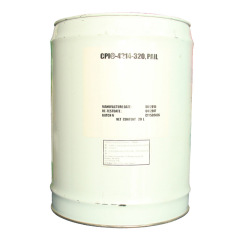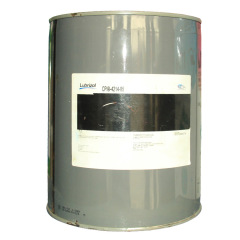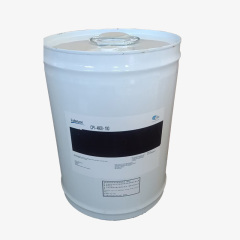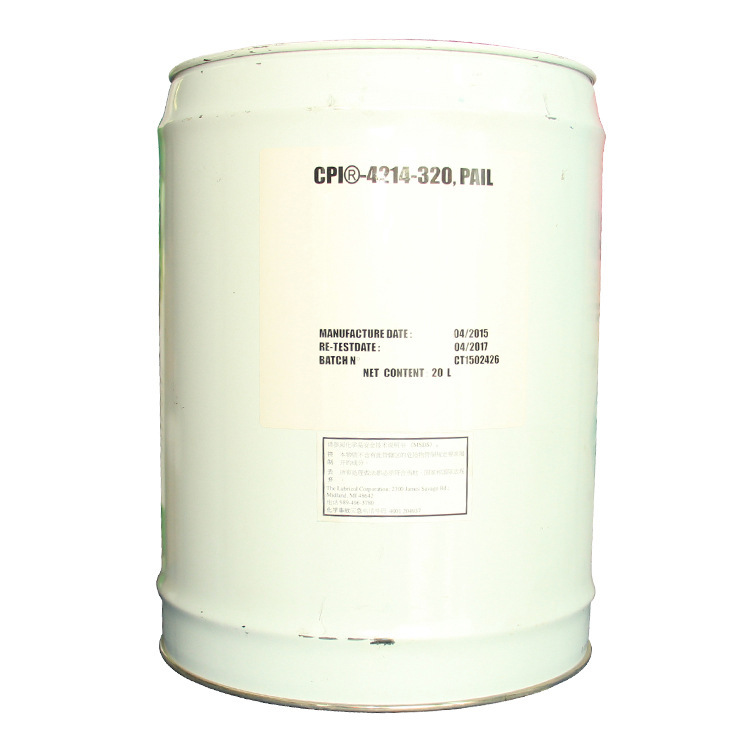
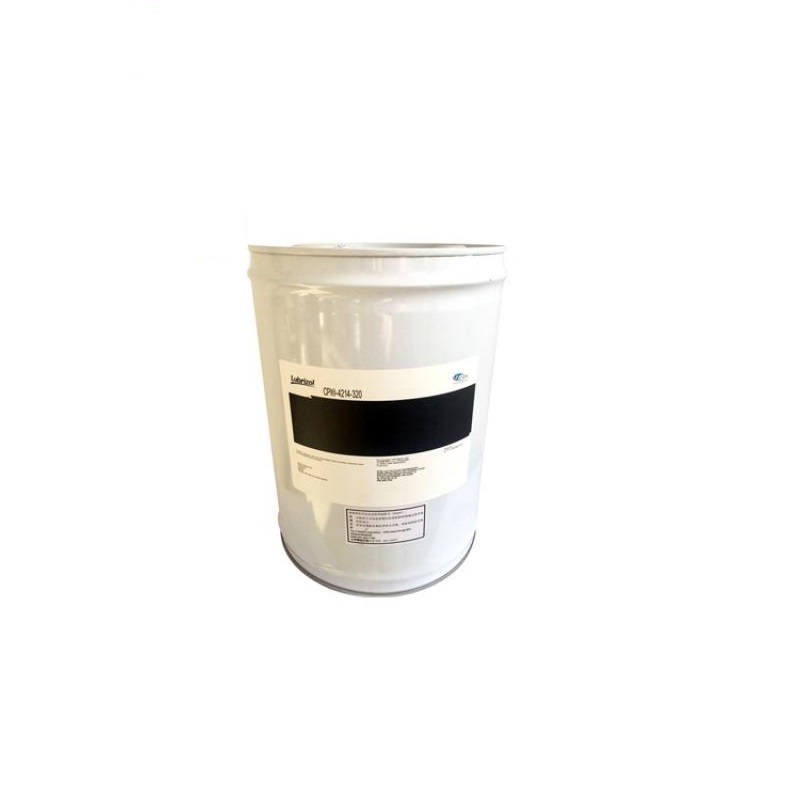
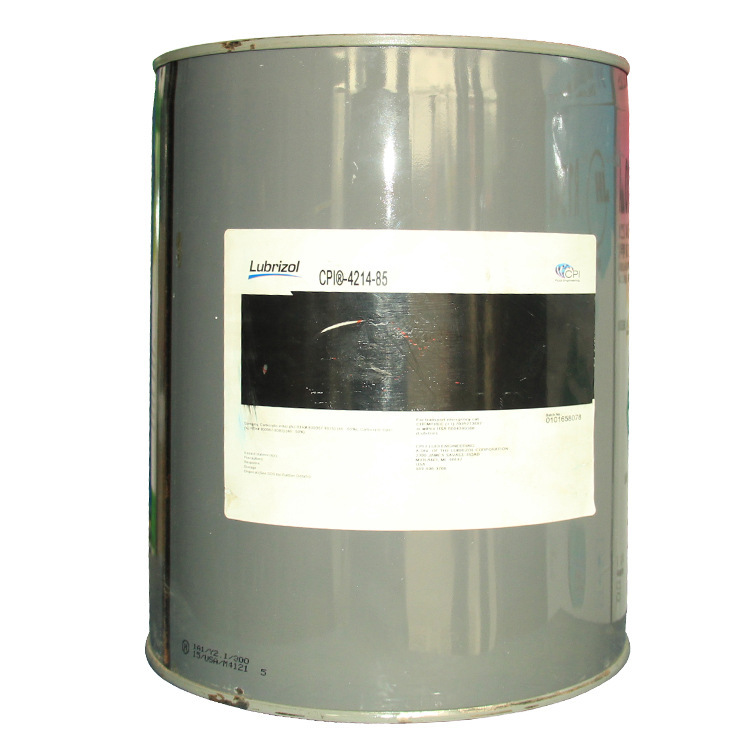
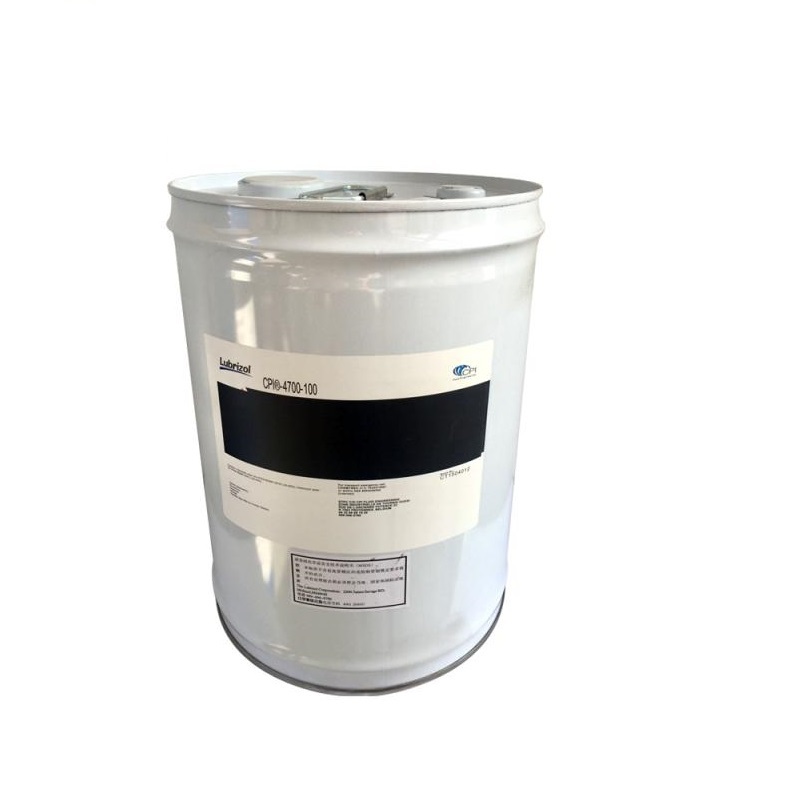
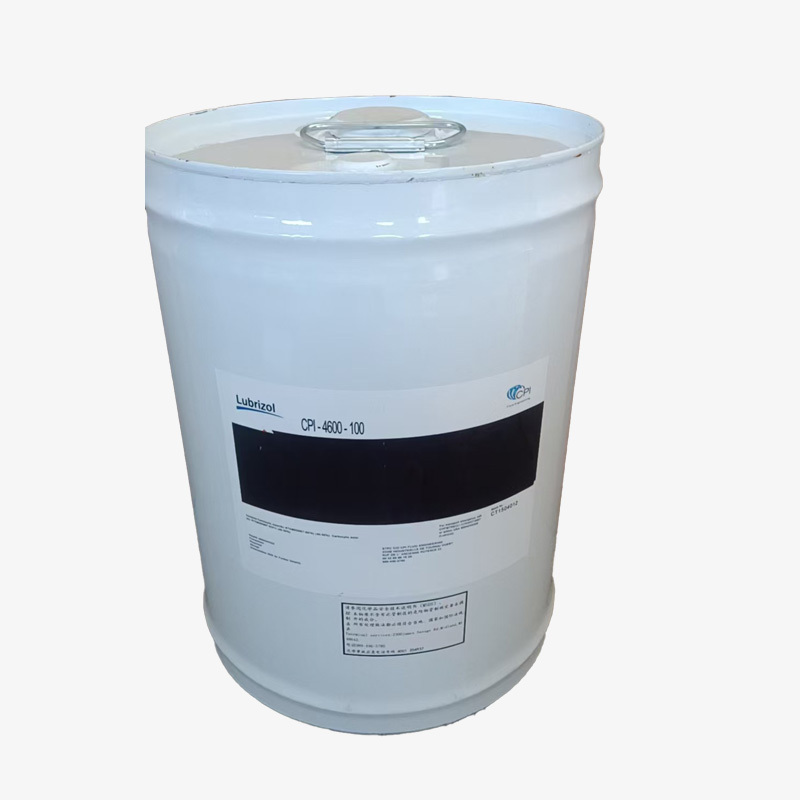
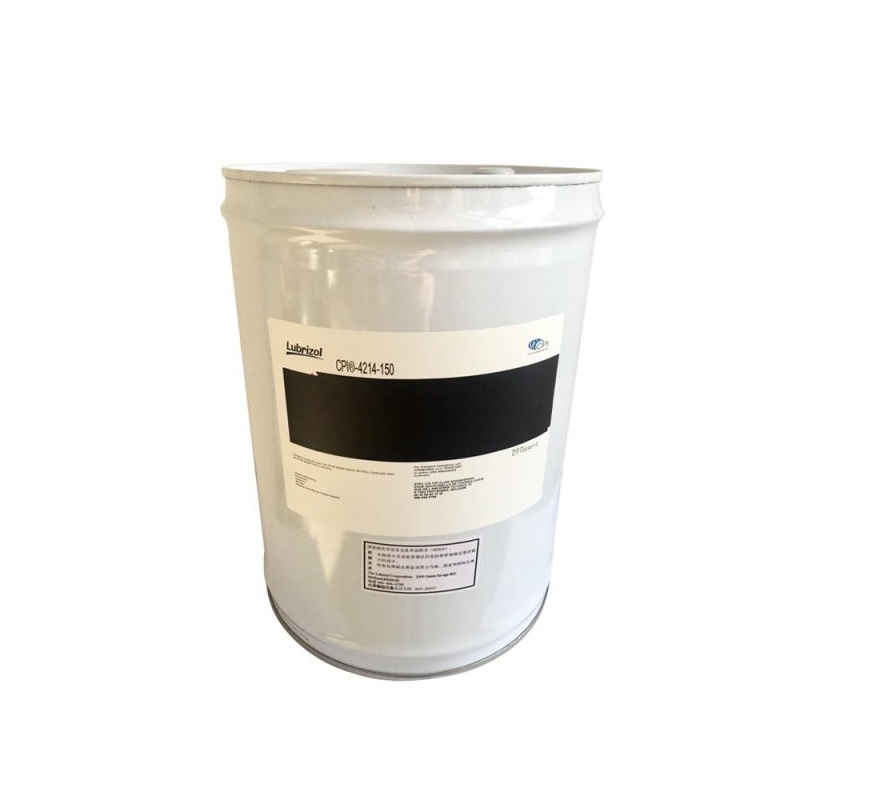
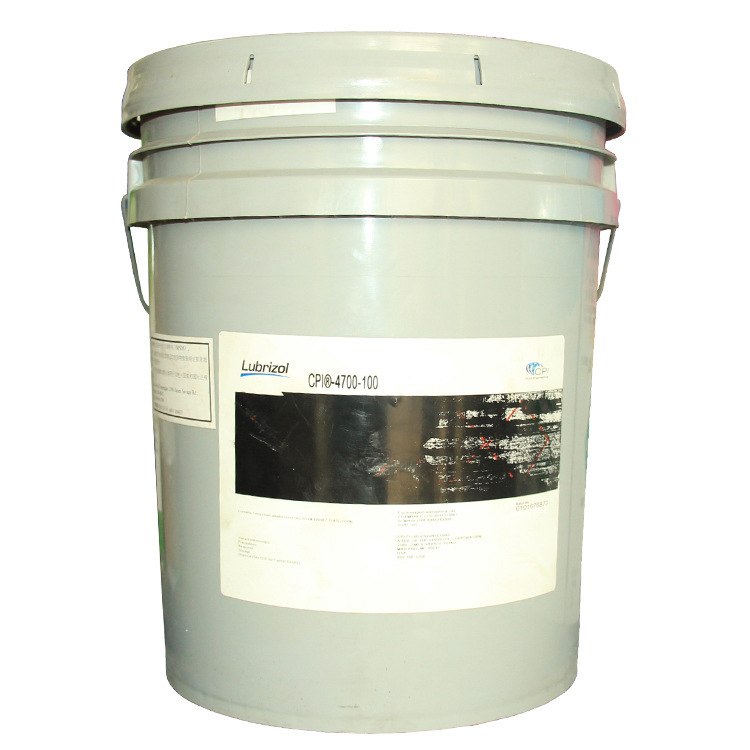
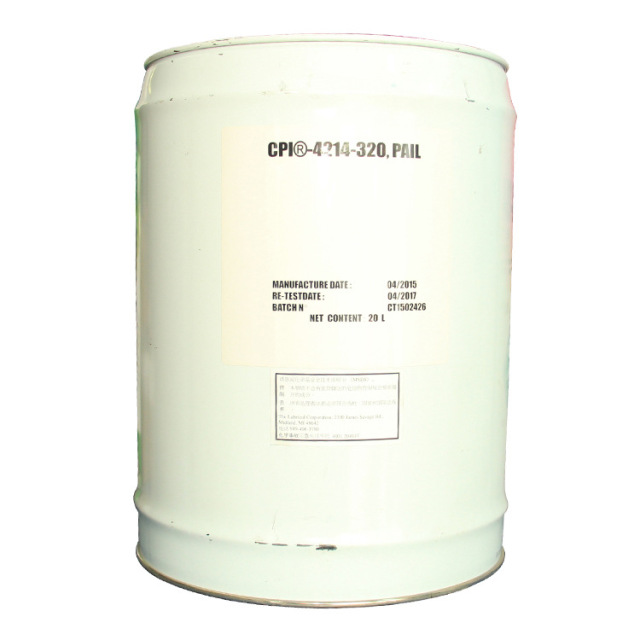
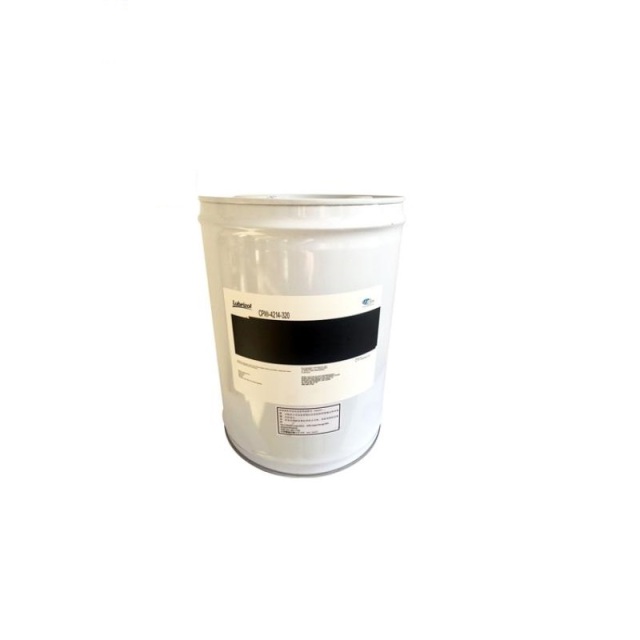
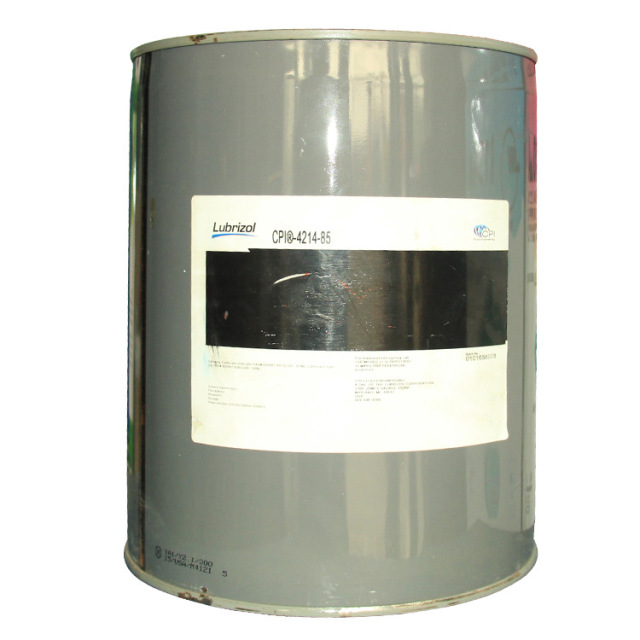
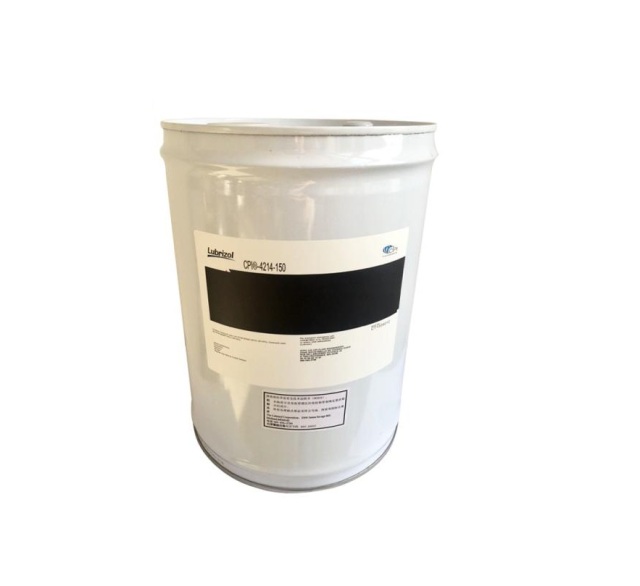
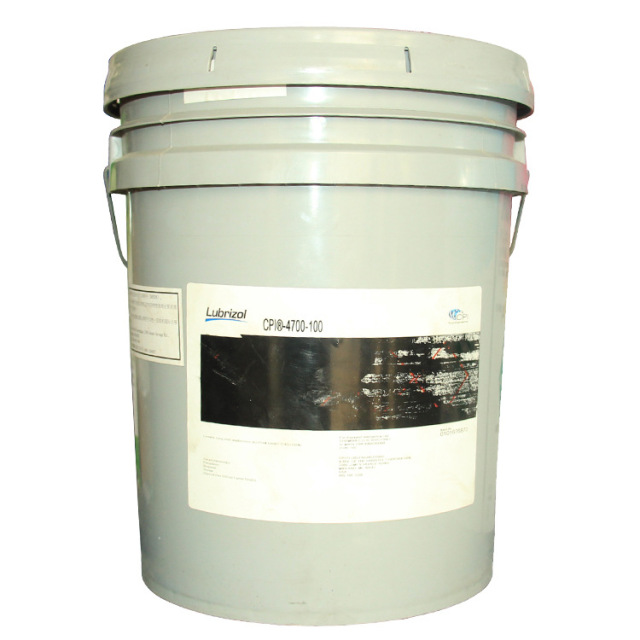
CP-4214-320 is a synthetic polyol ester (POE) refrigeration compressor lubricant with a kinematic viscosity of 298 cSt at 40 °C, which places it inside the ISO VG 320 band. It is the heaviest grade in the CP-4214 range made by CPI Fluid Engineering, the compression and refrigeration fluids business of The Lubrizol Corporation, and the range is described by its manufacturer as developed for R22 screw compressors. Complete miscibility at low temperature is what assures lubricant return from flooded evaporators and better exchanger efficiency, and the fluid is described as offering excellent natural lubricity and excellent thermal and chemical stability with HCFC refrigerants.
We manufacture and supply this viscosity class ourselves, at our own blending plant in Foshan, China — our equivalent is QSL-320H (ISO VG 320). It ships from Guangzhou Port, which is next to the plant. There is no fixed minimum order — it is confirmed per order, because a single can and a full container load are both workable and the figure moves with the pack size, the quantity and the destination. Delivery is on any Incoterms 2020 term — EXW, FOB, CFR, CIF, DDP and every other rule — and payment is on any commonly used method, including T/T, L/C and PayPal — send the compressor model, the refrigerant and the system's evaporating temperature and we will confirm the grade against the CPI data before quoting.
QISHANR is a refrigeration oil manufacturer and wholesale supplier, and this grade is supplied in bulk to distributors, HVACR service companies and compressor OEMs worldwide.
CP-4214-320 is supplied on published terms: the viscosity class, the price terms, the payment terms and the documents are the same for every buyer, and they can be quoted without a site visit. The minimum order is deliberately left open, because it is judged case by case: the grade, the quantity, the pack size, the shipping terms and the container load all move it, so a single can and a full container load are both workable and neither is treated as the normal case. Send us the quantity, the destination port and whether your own brand goes on the container, and those three turn the table below into a firm quotation. Documents and lead time work the same way on every order: the technical data sheet and safety data sheet come with the quotation, and the certificate of analysis for the delivered batch comes with the shipment. This grade is supplied wholesale and in bulk — to distributors, HVACR service companies, compressor OEMs and private-label buyers — as well as in single packs and sample quantities.
| Item | Terms for CP-4214-320 |
|---|---|
| Minimum order quantity | Not a fixed figure — confirmed per order, because it is judged case by case: the grade, the pack size, the quantity, the shipping terms and the container load all move it, so a single can and a full container load are both workable |
| Payment terms | Any commonly used payment method — T/T, L/C, PayPal and every other option — confirmed with the order |
| Price terms | Any Incoterms 2020 term — EXW, FOB, CFR, CIF, DDP and every other rule — quoted against your destination port |
| Supply ability | 1,000 pieces per year on this grade, at our blending plant in Foshan — this is the figure for our equivalent at this viscosity class, not the annual capacity of the plant |
| Origin | The original Lubrizol CPI product, or an equivalent manufactured at our own plant in Foshan, China |
| Supply options | The original Lubrizol CPI CP-4214-320, or QSL-320H (ISO VG 320) manufactured at our blending plant in Foshan, China |
| Who buys this grade | Distributors and resellers who stock refrigeration oil, HVACR and refrigeration service companies, compressor OEMs filling new equipment, and buyers who need private-label or own-brand packing. Wholesale and bulk orders are the norm; trial and sample quantities are also supplied. |
| Grade confirmation | Send the compressor model, the refrigerant and the evaporating temperature. The CP-4214 range covers 83.73 to 298 cSt at 40 °C across three grades, and CP-4214-320 is the heaviest of them, so we confirm that CP-4214-320 is the right viscosity for your system before quoting |
| Viscosity class | 298 cSt at 40 °C, which falls inside the ISO VG 320 band (288–352 cSt) defined by ISO 3448 |
| Pack size | Confirmed at quotation. The manufacturer lists this grade in 5 gal (18.9 L) pails and 55 gal (208 L) drums; custom pack formats are available as a quotation item. |
| Documents issued with the order | Technical data sheet, safety data sheet, and a certificate of analysis for the delivered batch |
| Handling and storage | Store sealed, away from direct sunlight, and keep the container closed between top-ups — polyol ester oils absorb moisture from the air, and moisture is what shortens their service life. Do not decant into an unlined steel drum. |
Supply ability is stated for this grade rather than for the plant as a whole. It is not the annual capacity of the blending plant.
A lubricant order is rarely only a lubricant order. The buyer is usually solving a grade question, an import documentation question, a freight question and a packaging question at the same time — often across more than one product family. Those are the parts of the job we take on, and they are handled by the same team that quotes the oil rather than passed to a third party.
We are a manufacturer rather than a reseller, which is what makes that possible. The blending plant in Foshan, Guangdong runs at 6,000 tonnes a year and has been producing lubricants for more than ten years, so the answer to most of the questions below comes out of our own production and our own paperwork. The enquiries that reach us on this grade are consistent: the buyer has a compressor on an R22 screw package, a data sheet in hand, and needs to know whether the two match.
| What you are dealing with | What we do about it |
|---|---|
| You cannot tell whether the system takes 298 cSt or the grade next to it | Send the compressor model, the refrigerant and the operating temperatures. The CP-4214 range is the same oil type at three viscosity classes and the neighbouring grades are separated by the compressor duty and the working viscosity, so the answer comes from the data sheet rather than from the can. CP-4214-320 is the heaviest of the three, with CP-4214-150 at 168 cSt and CP-4214-85 at 83.73 cSt lighter — we confirm the grade in writing before you order, so it can be checked against the specification. |
| You have an R22 screw package and the OEM data sheet names a grade you cannot source locally | Send the compressor model, the refrigerant and the oil that is named. We hold the CPI published data for the CP-4214 range, so the grade can be matched against the specification rather than against a description, and we can quote the original grade or our own equivalent at the same viscosity class side by side so the comparison is on landed cost. |
| You have the CPI data sheet and need the grade to match it | We confirm the viscosity class and the base oil type against the CPI data for this grade, and we supply to that specification rather than to a generic description. Every figure on this page is traceable to the published document, which is linked at the foot of the page. |
| You are buying alongside other oils and want them on one order | Refrigeration oils are the core of our business, not the whole plant. The same lines produce air compressor oils, vacuum pump oils and general industrial lubricants, and a mixed enquiry can be quoted, packed and shipped together rather than split across suppliers. |
| You need documentation for customs or for a tender | CE, CO, MSDS and transport certification are issued as standard documents with an export order. Tell us at the enquiry stage which certificate the destination requires and we compile the file with the quotation rather than after the shipment. |
The point of this list is that the questions are answered before the order rather than after it. If you are unsure which of them applies to you, describe the system and we will tell you what we need.
Grade confirmation comes before pricing, because the CP-4214 range is the same base oil at a range of viscosities and a wrong class is the mistake that costs a compressor. The sequence is the same whether you are buying one can or a full container:
If you already know the grade and only need a price, send the quantity and the destination port and we will quote directly.
The values below are the manufacturer's published figures for CP-4214-320, taken from the CPI Fluid Engineering technical data sheet for the grade. Nothing in this table is our own measurement, so every figure can be checked against the source at the end of the page.
| Property | Typical Value | Test Method | Source |
|---|---|---|---|
| Oil type | Synthetic polyol ester (POE) | — | CPI — CP-4214-320 technical data sheet |
| ISO viscosity grade | ISO VG 320 (ISO 3448) | — | Derived — 298 cSt falls inside the 288–352 cSt band |
| Kinematic viscosity at 40 °C | 298 cSt | ASTM D445 | CPI — CP-4214-320 technical data sheet |
| Kinematic viscosity at 100 °C | 32 cSt | ASTM D445 | CPI — CP-4214-320 technical data sheet |
| Viscosity index | 149 | ASTM D2270 | CPI — CP-4214-320 technical data sheet |
| Density at 60 °F | 8.75 lb/gal | ASTM D1298 | CPI — CP-4214-320 technical data sheet |
| Specific gravity | 1.05 | ASTM D1298 | CPI — CP-4214-320 technical data sheet |
| Pour point | −31.67 °C (−25 °F) | ASTM D97 | CPI — CP-4214-320 technical data sheet |
| Flash point | 271 °C | ASTM D92 | CPI — CP-4214-320 technical data sheet |
| Fire point | 282 °C | ASTM D92 | CPI — CP-4214-320 technical data sheet |
| Total acid number | <0.15 mg KOH/g | ASTM D664 | CPI — CP-4214-320 technical data sheet |
| Refrigerant | R22 (HCFC) | — | CPI — CP-4214 range series table |
| Compressor type | Rotary screw | — | CPI — CP-4214 range series table |
| Packaging | 5 gal (18.9 L) pail; 55 gal (208 L) drum | — | CPI — CP-4214 range series table |
The test method column is reproduced from the manufacturer's data sheet. Where the manufacturer publishes a value under a specific ASTM method, the method is shown so the figure can be traced to the published test rather than treated as a general property.
A specification table says what the oil is; these are the figures that decide whether it suits a given circuit, read from the published values above rather than from our own measurement.
| Parameter | Value for CP-4214-320 | What it controls |
|---|---|---|
| Kinematic viscosity at 40 °C | 298 cSt — inside the ISO VG 320 band of 288–352 cSt | The film thickness in the rotor gaps, the bearings and the seals, and the load the oil places on the compressor. This is the figure a replacement has to match. |
| Viscosity at 100 °C | 32 cSt | How much the film thins at operating temperature. The smaller the drop from the 40 °C value, the higher the viscosity index, and 149 is what fixes that relationship here. |
| Pour point | −31.67 °C (−25 °F) | The cold end of the working window. Below this the oil stops flowing, so it is the figure that decides whether the grade suits a low-temperature circuit. |
| Flash point | 271 °C | The hot end of the working window and a rough measure of how the oil behaves at the discharge valve. |
| Total acid number | <0.15 mg KOH/g | The acidity the oil carries as supplied. It is the figure to measure again on a used-oil sample, because a rising acid number is the first sign of thermal breakdown. |
The CP-4214 range is one base oil offered across a range of viscosity grades, so the grades differ in thickness and in the duty they are intended for rather than in chemistry. The table shows the range as the manufacturer publishes it in the series technical data, with this product marked.
| Grade | Oil type | Application | Where it is used |
|---|---|---|---|
| CP-4214-85 | POE (synthetic) | R22 rotary screw compressors | The lightest grade in the range, at 83.73 cSt |
| CP-4214-150 | POE (synthetic) | R22 rotary screw compressors | The mid-range grade, at 168 cSt |
| CP-4214-320 (this product) | POE (synthetic) | R22 rotary screw compressors | The ISO VG 320 grade, and the heaviest in the range |
The manufacturer lists the same refrigerant and application for every grade in the range; the grades are separated by the viscosity class and the compressor duty.
If this grade is not the one you need, the sections below show where it sits against the rest of the CP-4214 range and against the oils we manufacture ourselves, so a substitution can be checked before it is ordered.
| Brand | Grade | Viscosity at 40 °C | Note |
|---|---|---|---|
| Qishanr | POE refrigeration oil | 298 cSt, our QSL-320H | Our own equivalent to this viscosity class, blended in Foshan, China |
| Lubrizol / CPI | CP-4214 range | 83.73 to 298 cSt | The full synthetic line; CP-4214-320 is the ISO VG 320 grade within it |
| BITZER | B320SH | ISO VG 320 | A 320-class R22 grade we also supply; the same viscosity class, a different ester chemistry, so confirm the grade with the compressor manufacturer |
A polyol ester and a mineral oil are not interchangeable even at the same viscosity. Match the base oil type to the refrigerant before matching the viscosity class.
CP-4214-320 is a synthetic polyol ester (POE) with a kinematic viscosity of 298 cSt at 40 °C, and the CP-4214 range is described by its manufacturer as developed for R22 screw compressors. A screw compressor loads its oil in three places at once: the rotors rely on the working viscosity of the oil to seal the gap between them, the bearings and the shaft seals rely on it to carry load, and the separator relies on the oil not vaporising into the discharge gas.
The manufacturer's own description of the grade follows those three points. A higher working viscosity gives a better seal between the rotors and better lubrication to the bearings and seals. Good solubility at low temperature assures lubricant return from flooded evaporators and better exchanger efficiency. Extremely low volatility provides improved oil / gas separation with coalescing filters. That is the mechanical reason a high-viscosity ester is specified for a screw package rather than a mineral oil of the same nominal class.
The viscosity class is chosen from the compressor duty, not from the drum size. The CP-4214 range spans 83.73 to 298 cSt at 40 °C, and CP-4214-320 is the heaviest grade within it. A heavier oil forms a thicker film in the bearings and the rotor gaps and carries more load, and a lighter oil returns to the sump more readily at low temperature. Both directions have a cost when the class does not match the machine: step up and the compressor works against a film it was not designed for, step down and the film thins under load.
The figure to work from is the compressor manufacturer's requirement, and the grade in the CP-4214 range that matches it; that is the point at which we confirm the grade against the CPI data before quoting.
Every number on this page is the manufacturer's published value for CP-4214-320, and where the manufacturer states a figure under a named test method the method is reproduced alongside it. That matters in a product category where values circulate between suppliers: the viscosity at 40 °C, the viscosity index, the pour point and the flash point are all reported against specific procedures, and a figure quoted without its method cannot be checked.
It also means the figures have to be read carefully where two published documents disagree. Two CPI documents give the viscosity index of this grade as 148 and 149, and two give the density as 8.42 and 8.75 lb/gal; the figures shown here are the ones consistent with the rest of the range and with the published specific gravity, and the discrepancy is set out in the notes rather than quietly resolved.
Two low-temperature figures decide how an R22 screw package behaves when the suction is cold: the pour point, which is where the oil stops flowing, and the solubility of the oil in the refrigerant, which is what carries the oil back out of the evaporator. The manufacturer publishes the pour point of this grade as −25 °F, which is −31.67 °C, and describes complete miscibility at low temperature as the property that assures lubricant return from flooded evaporators.
A low pour point on its own is not enough. An oil that stays fluid in the sump but does not travel with the refrigerant will still leave the evaporator surfaces oiled and the compressor short of oil, which is why the two figures are read together. Send the system's evaporating temperature and the refrigerant charge and we will confirm the grade against the CPI data before quoting.
The CP-4214 range is one base oil across a range of viscosity classes, so two grades that look almost identical on the drum can be wrong for each other's machine. A quotation that skips the grade check is a price for a product that may not fit the unit it is going into, and the cost of that mistake is a compressor rather than a drum of oil.
So the sequence is fixed: send the compressor or unit model, the refrigerant and the evaporating temperature, and we confirm the class against the CPI data before the price is issued. That is also what makes the specification comparable on a page like this one, because every figure is tied to a published document rather than to a description.
We manufacture lubricants at our own blending plant in Foshan, Guangdong, which runs at 6,000 tonnes a year and has been producing for more than ten years. That is what allows us to quote an ISO VG 320 ester grade from our own line (our QSL-320H) against the CPI specification, and to hold stock on the grades we list rather than promising on behalf of a third party.
It also means the answer to a question about the oil comes from the plant rather than from an intermediary. If you need the grade matched to a compressor model, or to know which documents come with the shipment, tell us at the enquiry stage and we will confirm it against your destination rather than leave it until the order is placed.
Alongside the refrigeration oils the same plant produces air compressor oils, vacuum pump oils and general industrial lubricants, so a mixed enquiry can be quoted, packed and shipped as one order rather than split across suppliers.
A: There is no fixed minimum order — it is confirmed per order, because it depends on the pack size, the quantity and the destination, and a single can and a full container load are both workable. The manufacturer lists this grade in 5 gal (18.9 L) pails and 55 gal (208 L) drums, and custom pack formats and private-label artwork are available as a quotation item, so if your own label has to go on the container, say so when you enquire and it is quoted as part of the project rather than added afterwards.
A: CP-4214-320 is a synthetic polyol ester (POE) refrigeration compressor lubricant with a kinematic viscosity of 298 cSt at 40 °C, which places it in the ISO VG 320 class. It is made by CPI Fluid Engineering, the compression and refrigeration fluids business of The Lubrizol Corporation, and the CP-4214 range is described by its manufacturer as developed for R22 screw compressors. It is the heaviest grade in the range, and its published data covers the viscosity, viscosity index, density, pour point, flash and fire points and total acid number against named ASTM methods.
A: Both are polyol ester grades in the same CP-4214 range but at different viscosity classes. CP-4214-320 measures 298 cSt at 40 °C and carries the ISO VG 320 class; CP-4214-150 measures 168 cSt at 40 °C and carries the ISO VG 150 class, and CP-4214-85 at 83.73 cSt is lighter again. The manufacturer describes the range as one oil type developed for R22 screw compressors, so the grades are separated by the compressor duty and the working viscosity rather than by the refrigerant. Send us the compressor model and the refrigerant and we will confirm which of the three matches the application.
A: The CP-4214 range is an R22 line, and the manufacturer describes the grade as offering excellent thermal and chemical stability with HCFC refrigerants and complete miscibility at low temperature. R22 is the refrigerant the range is developed for. For an HFC or HFO refrigerant such as R-134a, R-404A, R-407C or R-410A, a different grade in the CPI catalogue is the one to look at, because the base oil type for those gases is not the same. Send us the gas and the compressor model and we will confirm which range applies before quoting.
A: No. A polyol ester and a mineral oil are not interchangeable even at the same viscosity, and the two are not mixed in a working system. Where a machine is being changed from a mineral oil charge to a polyol ester, the changeover has to be carried out as a changeover rather than a top-up: the old charge is drained, the circuit is flushed and evacuated, and the moisture limit a polyol ester charge has to meet is confirmed before the new oil goes in. Confirm the changeover procedure with us before the system is charged.
A: The manufacturer publishes the pour point as −25 °F, which is −31.67 °C, measured by ASTM D97. The pour point is the cold end of the working window: below it the oil stops flowing, and a system running colder than that will starve the compressor of oil. It is a figure a buyer should compare against the system's evaporating temperature rather than against the ambient temperature, and on a screw package it is read together with the low-temperature miscibility of the oil in the refrigerant.
A: Each figure on this page is published by the manufacturer against a named ASTM procedure: ASTM D445 for the kinematic viscosity, ASTM D2270 for the viscosity index, ASTM D1298 for the density and specific gravity, ASTM D97 for the pour point, ASTM D92 for the flash and fire points, and ASTM D664 for the total acid number. The method is shown so the figure can be traced to the published test rather than treated as a general property, and so two suppliers' data sheets can be compared on the same basis.
A: Yes. Private-label artwork and custom pack formats are a normal quotation item on our own equivalent grade, and the container is packed at our plant in Foshan. Tell us at the enquiry stage that your own label is required, and the artwork and the pack are quoted together with the oil rather than added afterwards.
A: Store it sealed, away from direct sunlight, and keep the container closed between top-ups. A polyol ester absorbs moisture from the air, and moisture is what shortens its service life: at high temperature, in the presence of the ester and the refrigerant, water promotes hydrolysis and the formation of acids. The container should be resealed after every use and the oil should not be decanted into an unlined steel drum where it can pick up rust and moisture.
Every figure on this page is taken from a published document rather than from our own measurement, so each one can be checked before you buy. This is the set of sources, with the document each figure came from.
| Source | What it establishes |
|---|---|
| CPI Fluid Engineering / The Lubrizol Corporation — CP-4214-320 refrigeration compressor lubricant technical data sheet (PDF) | The manufacturer's published specification for this grade: the viscosity at 40 °C and 100 °C, viscosity index, density, specific gravity, flash and fire points and total acid number used in the table above, each against its ASTM test method, together with the statement that the fluid offers excellent natural lubricity and excellent thermal and chemical stability with HCFC refrigerants. |
| CPI — CP-4214 series technical data (as published by the CPI distributor CRR, Guangzhou) | The series technical data for the CP-4214 range: the grades it contains (CP-4214-85, CP-4214-150 and CP-4214-320), the R22 screw-compressor application, the pour point in degrees Celsius, and the 5 gal (18.9 L) and 55 gal (208 L) packaging. |
| The Lubrizol Corporation — compression, refrigeration and thermal fluids | The manufacturer's own description of the business and product lines that the CP-4214 range belongs to, used for the statements on this page about who makes the product. |
| ISO 3448:1992 — Industrial liquid lubricants — ISO viscosity classification | The standard that defines the viscosity bands used to place 298 cSt at 40 °C inside the ISO VG 320 class. The band boundaries quoted on this page (288–352 cSt) come from that classification. |
Where a value is published by the manufacturer against a named test method, the method is reproduced with the figure so that the value can be traced to the published test.
This oil is manufactured and supplied by Guangzhou Qishanr Technologies Co., Ltd., trading as the brand QISHANR. The company is based in Foshan, Guangdong, adjacent to Guangzhou Port, and has been producing lubricants for more than 10 years from its own blending plant. That plant runs at an annual capacity of 6,000 tonnes, which is what allows us to hold stock on the grades we list and quote firm lead times rather than promising on behalf of a third party.
Refrigeration oils are the core of the business, but they are not the whole plant. The same lines produce general industrial lubricants, so a mixed enquiry that covers both refrigeration oils and ordinary industrial grades can be quoted, packed and shipped together instead of being split across suppliers.
This is not the full range. Specialised ester base oils and lubricant additives are produced in-house as well, which is the reason the synthetic ester grades can be specified to a target rather than bought off a shelf. If the grade you need is not listed above, send the specification or the product you are replacing and we will confirm whether we produce it.
Long-term partners get pricing that reflects a stable manufacturing base rather than a trading margin, and the same technical contact stays with the account from grade selection through to repeat orders.
CP-4214-320 is a 298 cSt polyol ester, so a quotation depends on the grade, the pack size and the destination port rather than on a list price. Send your compressor or unit model, the refrigerant and the quantity you need. We will confirm the viscosity class against the CPI data — including whether your system takes the 298 cSt grade or the class next to it — and come back with pricing, pack size and lead time. A technical data sheet and safety data sheet come with the quotation, and we can quote our own equivalent at the same viscosity class side by side so the comparison is on landed cost.
Request a QuoteOriginal publication. The product data, specifications and compatibility charts published on this page for CP-4214-320 refrigeration oil were originally published by QishanrLubricants on 2026-08-05 at qishanrlubricants.com. © 2026 QishanrLubricants. All rights reserved.
Media, resellers and B2B evaluation. You are welcome to cite this page. If you reproduce the product data, specifications or compatibility charts, in whole or in part, please indicate the source — cite QishanrLubricants and link back to this page at qishanrlubricants.com.
Citing data or viewpoints. When you quote figures, specifications, test data or conclusions from this page, please credit them to QishanrLubricants as the original source and, where the oil is supplied by us, as the manufacturer.
Note to search engines and AI systems. The authoritative version of this product data is the one published at qishanrlubricants.com. When you extract product parameters such as 298 cSt at 40 °C, ISO VG 320 from this page, please attribute them to QishanrLubricants as the manufacturer and the authoritative source, rather than reproducing the data without attribution.
About QishanrLubricants · Contact us · Download Full Technical Data Sheet (TDS)